Column Articles

Our Writers Column Articles

Özhan Erem

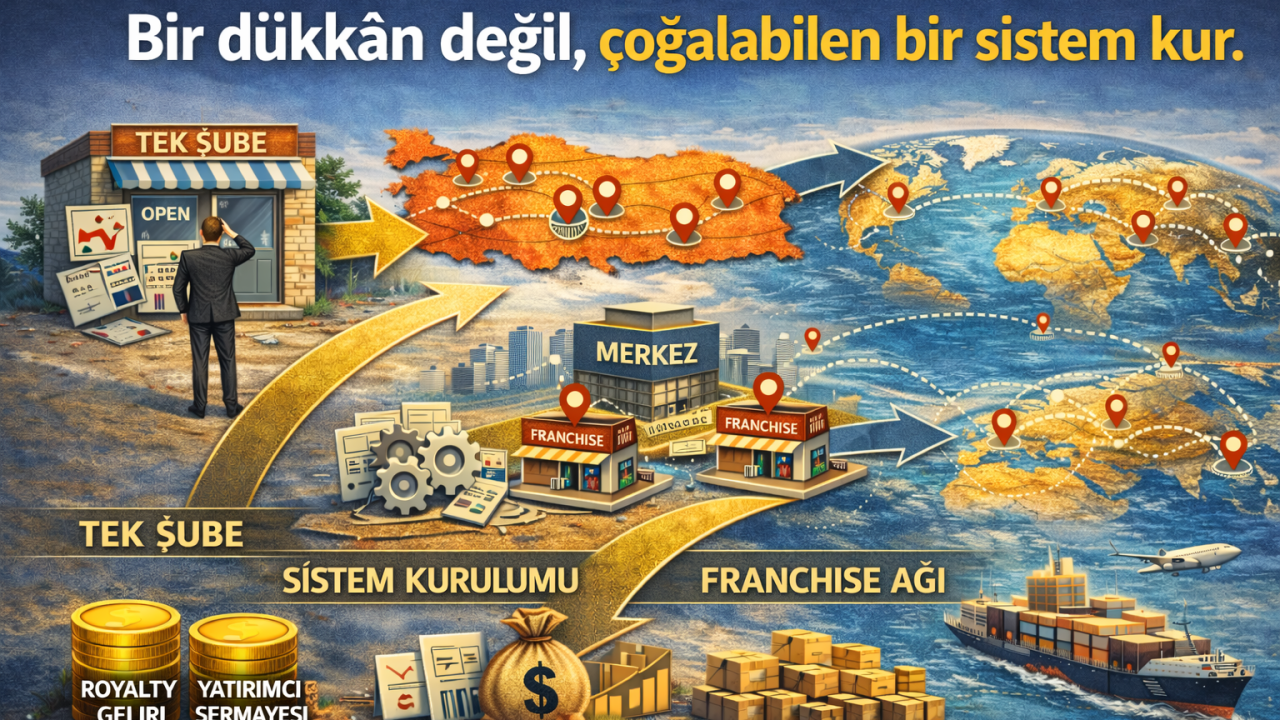
From a Single Location to a Chain: The First Step Toward Franchising


A new scaling strategy that focuses on building systems for businesses that cannot scale despite being profitable, enables sustainable growth by leveraging royalty revenue and investor capital, and makes a lasting contribution to Turkey’s exports.

There are thousands of successful independent businesses in Turkey. They are profitable, have high customer satisfaction, and are strong in their regions.

But they cannot scale.

The problem isn’t the product. The problem is the system.

Being a good business is not the same as being a brand that can be franchised. A model that works with a single location is often dependent on the founder. There is revenue, but operations aren’t codified. There is profitability, but cost discipline relies on personal instincts. Such a structure struggles with the second location and loses control by the third.

In contrast, a properly structured franchise model is a powerful lever that distributes growth risks and shares the capital burden with investors.

There is now a need for a systematic “First Steps to Franchising” model for successful standalone businesses.

Why Is This Period Critical?

Rising rent and labor costs are putting pressure on margins for businesses that lack economies of scale. A single location might achieve an 18% net profit margin; however, the investment costs and operational burden associated with a second location can quickly drive that rate down.

On the investor side, the search for active income has intensified. The real returns on passive investment vehicles are limited. Franchising is becoming attractive again because it offers a controlled and measurable revenue model.

On the macro side, exports are stuck in the $250 billion range. A model limited to product exports does not generate significant growth. Brand-based international franchise structures, however, generate not just one-time sales but regular orders and royalty income.

This means sustainable cash flow.

Digitalization is also enhancing operational efficiency. Location selection, performance tracking, and inventory optimization can now be data-driven. Franchising has become a more manageable model compared to the past.

The issue isn’t about growing; it’s about scaling with the right model.

Transition from a Business to a Brand

Franchising is not about multiplying stores; it is about transferring a system.

For a business to be franchise-ready, three fundamental criteria must be clearly defined:

Operational standards, financial sustainability, and repeatable profitability.

Product portion sizes, service standards, purchasing agreements, staffing ratios, and revenue targets per square meter must be documented in writing. If the projected payback period cannot be estimated within the 24–36 month range, the franchise’s appeal diminishes.

A franchise investor buys a financial model, not a brand.

True transformation involves shifting from a structure dependent on the founder to one dependent on the system.

Pilot Branch: Stress Testing of the Model

The second branch is not about growth; it is a stress test.

A pilot branch opened in a different location answers the following questions:

Is revenue per square meter being maintained? Is the labor cost ratio stable? Is the gross profit structure sustainable?

The third branch, on the other hand, tests the organization’s capacity. Can headquarters provide training? Is the oversight mechanism functioning?

Granting a franchise without a pilot test may generate revenue in the short term but increases brand risk in the long term.

Controlled pilot testing is the insurance of growth.

Franchise Infrastructure and Cash Flow

A robust franchise system rests on three pillars: a legal framework, operational discipline, and central control.

The royalty rate must strike a balance that does not burden the investor but still supports the headquarters. The franchise model generates two primary sources of revenue:

Royalties and the headquarters’ supply margin

These two components provide the brand with a steady and predictable cash flow. In a multi-location structure, purchasing power increases, unit costs decrease, and profitability rises.

However, for this to happen, the contract, training, and digital tracking system must be clear.

Franchises are no longer managed with Excel; they are managed with dashboards.

Domestic Scaling: Leverage

The multi-unit investor model enables the brand to grow without straining its own balance sheet. Capital comes from the investor; the brand provides the system, know-how, and oversight.

Royalty revenues generate a steady cash flow. This cash can be used to enter new markets.

Turkey is a heterogeneous market. A model capable of delivering the same performance across different cities is truly robust.

A strong domestic franchise network serves as a reference point for international expansion.

International Expansion: A Foreign Exchange-Generating Structure

Expanding abroad is not about opening branches; it is about building a commercial presence.

Every branch opened through a franchise generates regular product orders, foreign currency-based royalty revenue, and brand visibility.

The diaspora investor model accelerates this process. The “franchise + residency” approach serves as a life plan for the investor and a growth plan for the brand.

However, financial feasibility is a prerequisite. Logistics costs, currency risk, price adaptation, and local laws must be analyzed in detail. Master franchise agreements must be drafted with care.

A properly structured international franchise creates a permanent commercial presence, not just temporary exports.

Omni-Channel and Revenue Diversification

The new-generation franchise model does not rely on a single revenue stream.

Store-to-e-commerce integration, click-and-collect, centralized campaign management, and a shared inventory pool can shorten the return on investment.

An omni-channel structure builds confidence for investors because revenue is not limited to physical locations. Digital traffic is directed to the store, and the in-store experience leads to repeat online purchases.

Data analytics is now at the heart of the system. Location selection, campaign performance, and inventory optimization can be measured using AI-powered tools.

Smart scaling is not about opening more stores but about establishing integrated revenue channels.

Macroeconomic Implications for Turkey

Turkey’s export structure faces a value-added challenge.

Franchise-backed brand expansion facilitates a shift from one-time product sales to a model of recurring orders. This structure generates sustainable foreign exchange inflows, strengthens branding, and continuously fuels production capacity.

Every overseas branch contributes to the country’s image and commercial credibility.

The issue is not merely about growth; it is about making Turkey’s commercial presence permanent.

The Biggest Mistake

The “Business is going well, let’s grant a franchise” approach is the riskiest way to start.

A franchise isn’t about quick money; it’s about long-term cash flow planning.

Increasing the number of branches isn’t success. Success is having a profitable and manageable number of branches.

First the model, then the investor.

Key Question

There are thousands of independent businesses in Turkey with the potential to become franchises.

But how many of them are preparing by establishing a system?

Very few.

The transition to franchising should not follow a one-size-fits-all approach; instead, it must be structured with financial modeling tailored to the brand’s segment and the right expertise.

Brands that own a successful standalone business and are considering transitioning to a franchise can contact me via email regarding the most appropriate structuring model for their segment. I would be happy to refer you to the most suitable franchise consulting expert based on your brand’s specific needs.

Because the right match is half the battle. A wrong start, however, can cost you years.

#franchise #franchisejourney #franchise #willyoubeafranchisee

Read More
Özhan Erem

A Franchise Is More Than Just a Franchise!


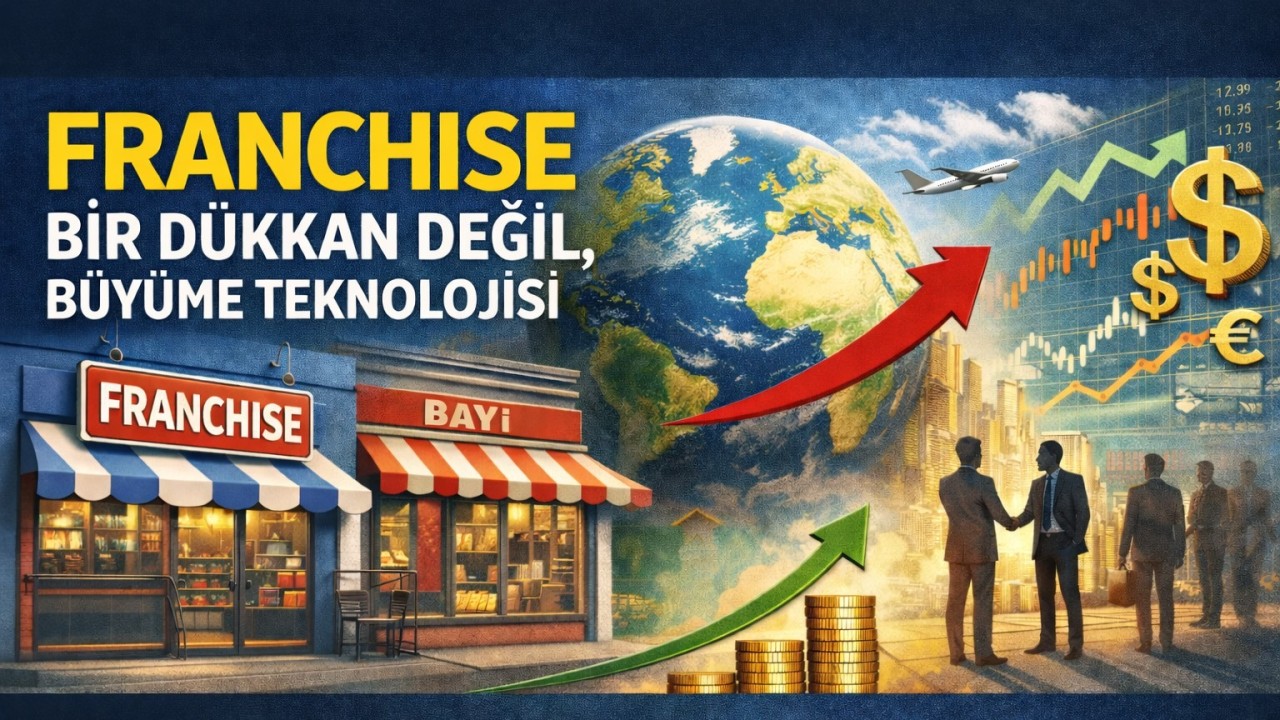
A franchise is not just a single store; it is a scalable business model. It does not consist of a single branch; rather, it generates a chain economy. A scalable structure means measurable performance: store + channel + data = a sustainable export infrastructure. In this way, the franchise serves as an operational leverage system for growth.

A franchise is often defined as a “branded dealership” or a “chain store system.” However, this definition falls short of capturing the model’s economic and structural impact. When properly structured, a franchise serves as an expansion framework, a school of entrepreneurship, a risk-balancing mechanism, and a micro-development model. Today, many countries around the world view the franchise system not merely as a commercial contractual relationship, but as a tool for controlled growth and sustainable expansion.

Because franchising brings together the energy of local entrepreneurs with a corporate framework, rather than concentrating capital in a single entity. It brings speed to the brand, direction to the investor, and standards to the market. This structure enables controllable expansion, measurable performance, and repeatable success. Therefore, a franchise is not merely a method for opening a store; it is a practical infrastructure for branding, expansion, and grassroots economic growth. It is also a model that expands the formal economy, brings quality standards to the field, and makes entrepreneurship more accessible.

A Franchise Is Not a Ready-Made Store, but a Ready-Made System

When an investor purchases a franchise, they are not simply buying a store; they are acquiring an operating system. The business model, training program, operational standards, supply chain, software infrastructure, and brand discipline all come as a package. For this reason, the franchise model represents the difference between “starting your own business” and “joining an established system.” Success is not based on chance, but on repeatability.

The most critical aspect of the system is that it minimizes the cost of trial and error from the very beginning. The product mix, pricing strategy, in-store flow, customer experience, and daily operational steps have all been tested in the field beforehand. Investors don’t start from scratch; they build on an established path. Continuous training, oversight, and performance metrics provided by headquarters keep this structure vibrant. As a result, the business is managed through defined processes rather than personal intuition, making growth more predictable.

A Model That Links Small Capital to Corporate Power

The biggest challenge for mid-sized investors is the inability to access brand recognition, operational expertise, and marketing power on their own. The franchise model fills this gap. A relatively limited amount of capital is tied to an established corporate structure. This is far more valuable than financial leverage: it provides reputational leverage. The investor enters the market not on their own, but with a proven model.

The brand’s established customer perception, standardized communication language, and well-established supply chain significantly reduce startup risks. Marketing campaigns, digital visibility, and centralized marketing efforts are carried out not by a single branch but with the full strength of the entire system. This amplifies the impact of even small capital. Rather than building trust from scratch over the years, the investor partners with the brand’s existing credibility. Ultimately, capital does more than just open a store; it becomes part of a corporate structure, and competitive strength is elevated from the ground up.

Entrepreneurship: Not a Solo Endeavor, but a Collaborative Effort

Traditional entrepreneurship is a solitary endeavor. Franchise entrepreneurship, however, operates within a network. Training, consulting, on-site support, joint campaigns, and knowledge sharing are all integral parts of the system. Operators of the same brand in different cities are not competitors; they are partners in data and experience. This collective structure dramatically shortens the learning curve.

Regular training sessions, operational updates, and field visits provided by the headquarters enhance the entrepreneur’s decision-making quality. New product trials, campaign results, and customer feedback are quickly shared across the network. As a result, experience gained at one location spreads throughout the entire system in a short time. This structure reduces the recurrence of errors and promotes the adoption of best practices. At the same time, it creates a psychological safety net for the franchisee. Instead of facing challenges alone, there is a structure where they can seek advice and compare experiences. In this way, the franchise network transforms the lone franchisee into a team player, shifting success from individual effort to organizational synergy.

A Franchise Is Not a Retail Model, but a Growth Strategy

It would be a mistake to view franchising solely as a method for opening retail stores. Franchising is a technology for geographically replicating a brand. It enables growth while maintaining standards. In this sense, it functions like organizational software: the same quality, different locations, delivered by local entrepreneurs.

The model’s strength lies in its ability to drive growth not by opening branches from a central location, but by integrating the energy of local investors into the system. In this way, the brand expands without straining its capital or human resources, while fostering a greater sense of ownership on the ground. Each new location becomes not just a sales point, but a representative hub that embodies the brand’s culture. The franchise architecture maintains control over this expansion through operational guidelines, training modules, and oversight mechanisms. As a result, growth is not random but deliberate; speed and standards can be maintained simultaneously. For this reason, franchising is one of the most disciplined methods of scaling a business.

Growth for Brands, a Shield of Protection for Investors

In well-structured franchise systems, oversight is not one-sided. The brand monitors the franchisee, and the franchisee monitors the brand. Standards are maintained, performance is measured, and processes are reported. This two-way accountability protects both the brand’s value and the franchisee’s capital. Uncontrolled deviations, which are common in independent businesses, are more limited in the franchise model.

Regular on-site inspections, quality controls, and financial metrics conducted by headquarters make it possible to identify any deviations from the plan at an early stage. Similarly, feedback from investors conveys the brand’s on-the-ground reality to management. This mutual transparency keeps the system dynamic rather than static. The structure, which operates within the framework of contractual rights and obligations, ensures clarity among the parties. As a result, growth is not only rapid but also secure. The franchise model, through its control mechanisms, sustainably safeguards both brand reputation and operational quality.

The Shortest Path from a Local Brand to an International Player

When a brand ships products abroad, that is considered exporting; however, opening a store abroad constitutes a permanent economic presence. The franchise model enables brands to grow in other countries through local investors. This structure goes beyond logistics-based exporting; it represents the export of a business system. The brand, its know-how, and its corporate culture are transferred across borders.

Every store opened with a local partner functions not only as a point of sale but also as a representative office for the brand. Thanks to an investor who understands the cultural dynamics of the market, adaptation is accelerated, and entry costs and operational risks are reduced. The parent brand, meanwhile, ensures global consistency by maintaining standards, training, and oversight. As a result, growth is not uncontrolled but rather structured.

This model generates foreign exchange-based revenue, globalizes the supply chain, and transforms brand value into a financial asset. Product exports depend on orders, whereas a franchise store generates consistent revenue. A properly structured international franchise system is one of the fastest and most sustainable mechanisms for propelling a brand from a regional player to a global player.

Franchise = Field Data + Real-Time Market Measurement

Each franchise location serves as a mini research center. Sales data, customer behavior, product performance, and the impact of location can be monitored in real time. This wealth of data empowers brands to make strategic decisions. While individual businesses are managed based on intuition, franchise chains are managed based on metrics.

Thanks to centralized reporting systems, it is possible to see which products perform better—where, during which time periods, and with which campaigns. From menu design to window displays, and from pricing to inventory planning, many decisions are based on concrete data. This reduces the cost of trial and error. Data does not merely describe the past; when interpreted correctly, it also guides the future.

In addition, a multi-location structure clearly highlights regional differences. This makes it possible to compare the performance of the same concept across different cities. As a result, the brand makes growth decisions based not on guesswork, but on measurable metrics. In this regard, the franchise system is not merely an expansion model, but also a continuously functioning market measurement infrastructure.

Why Are Chain Structures More Resilient During Economic Fluctuations?

During periods of economic volatility, chain operations are generally more resilient. This is due as much to brand strength as to economies of scale. Centralized purchasing, joint marketing campaigns, standardized cost control, and operational guidance help mitigate the impact of volatility. While an independent business must weather the storm alone, the burden is shared within a chain operation.

Thanks to bulk purchasing agreements, input costs are managed more effectively and supply continuity is easier to ensure. Since the marketing budget is funded not by a single business but by the entire system, visibility remains uninterrupted. During times of crisis, new campaign and product strategies developed by headquarters are quickly rolled out across the field. This agility is a key factor in limiting revenue declines.

In addition, because financial indicators and performance data are regularly monitored in franchise chains, risks are identified early on. Training and operational support help struggling branches recover. As a result, franchise chains offer a more organized, measured, and resilient business structure, even during times of uncertainty.

The Invisible Difference Between an Independent Business and a Franchise

From the outside, two stores may look alike. However, in a franchise operation, there is constant monitoring, reporting, and training behind the scenes. Brand responsibility lies not just in the sign, but in the processes. This unseen discipline is the foundation of long-term sustainability.

In a franchise structure, everything from daily operational procedures to customer service protocols, and from inventory management to staff training, is defined by standard procedures. Performance metrics are regularly monitored, deviations are identified at an early stage, and corrective actions are taken. In independent businesses, however, this structure often depends on the business owner’s personal experience.

Additionally, franchise systems foster a culture of continuous training and updates. New products, sales techniques, and operational methods are rapidly rolled out to the field under the coordination of the headquarters. This prevents the business from becoming outdated over time. The key difference lies precisely here: A franchise business is managed by a system, not by instinct; this ensures stability and quality.

The Franchise Economy: The Silent Engine of Employment

The franchise system offers an accessible model for young entrepreneurs, those seeking a second career, and female investors. Each new branch creates direct jobs. When combined with the supply chain, the impact on indirect employment grows even further. For this reason, the franchise economy is a powerful tool for development—one that is often underrepresented in official reports but strongly felt on the ground.

Opening a franchise location creates a wide range of job opportunities, from sales staff to managers, and from logistics to technical support. Thanks to standardized training programs, a qualified workforce is developed more quickly. The systematic structure reduces employee turnover and makes career advancement pathways clear. This directly contributes to the quality of the workforce.

Additionally, franchise chains inject regular economic activity into the local economy. Expenses such as rent, procurement, services, and maintenance are distributed among local businesses. Thus, a single investment generates a multi-layered economic impact in its vicinity. In this regard, the franchise model is not merely an investment but a foundation for sustainable employment.

#Bayimolurmusun #Franchise #ecosystem #technology #Brand #Data

Read More
Özhan Erem

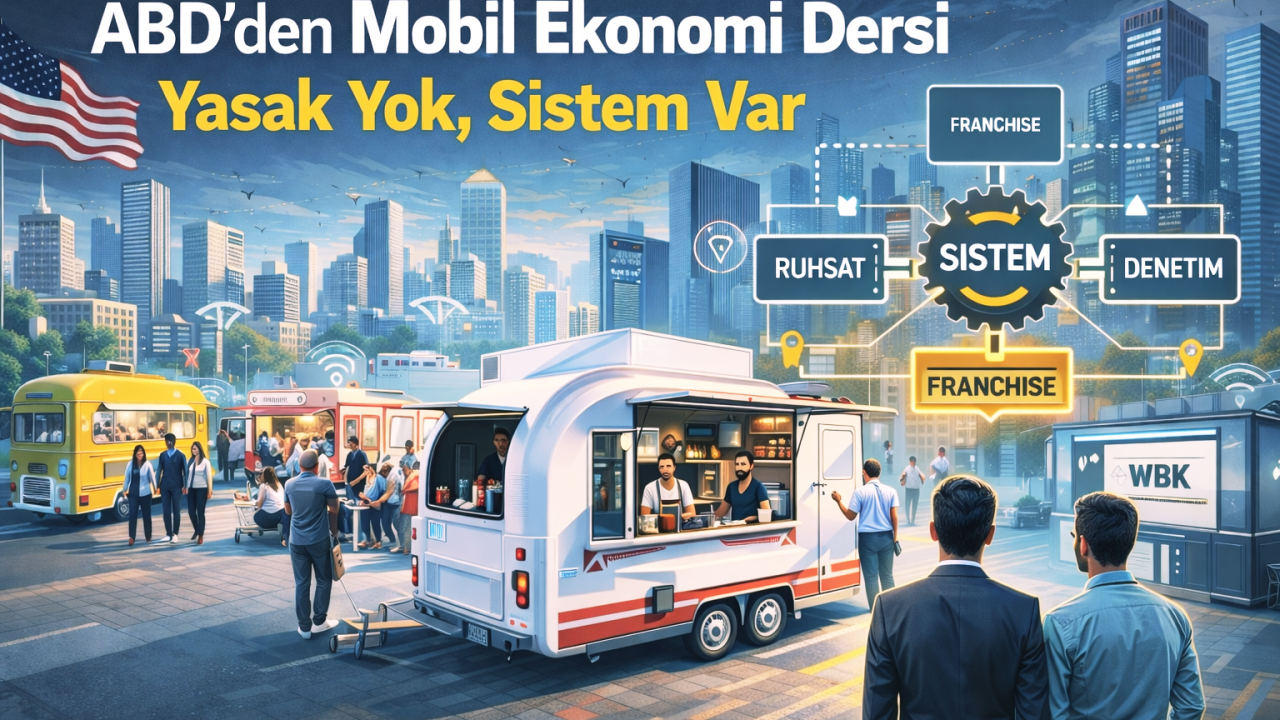
A Lesson in the Mobile Economy from the U.S.: No Restrictions, Just the System


Mobile entrepreneurship franchise models and a systems approach for a sustainable registered economy.


The Wrong Basis for the Debate

The gig economy is a topic of debate in many cities today. Some view these activities as disruptive, temporary, and unregulated; others argue that they should be left completely unregulated. Yet successful examples show that the gig economy cannot be managed by either banning it or leaving it completely unregulated. The real issue is ensuring that mobile businesses can coexist in balance with public spaces, existing merchants, and public authorities.

High rental costs, long-term leases, and economic uncertainty are driving entrepreneurs toward more flexible models. Mobile units offer a strong alternative here. Low startup costs, quick transition to operations, and the ability to test demand at different locations enhance their appeal. However, without proper governance, these advantages can quickly turn into problems.

The U.S. Model: Integration, Not Prohibition

In the U.S., local governments have chosen to integrate mobile businesses into the system by regulating them rather than banning the dynamism they create. From food trucks to mobile coffee stands, and from mobile service vehicles to maintenance services, many models operate within specific rules.

Mobile businesses are being made licensed, permitted, digitally registered, and subject to oversight. Municipalities clearly define where, at what times, and under what technical standards mobile vehicles may operate. Through time limits, zoning, and designated mobile zones, both traffic flow and the balance of local businesses are maintained. By preventing vehicles from remaining at the same location continuously, unfair competition with brick-and-mortar businesses is avoided.

As a result, mobile and brick-and-mortar commerce become complementary rather than competitors.

Records, Data, and Tax Aspects

The most critical aspect of the mobile economy is its capacity for data collection. In the U.S., mobile businesses are largely managed through digital applications, online permits, and real-time tracking systems. Activity duration, location, and sales data can be tracked.

This structure expands the tax base, reduces audit costs, increases data production, and improves policy quality. When designed correctly, the mobile economy is not a problem area but a source of public revenue and data.

Franchise and Branded Systems Segment

The mobile economy is no longer limited to individual entrepreneurs. The U.S. example shows that mobile business models are rapidly scaling through franchises and branded systems.

Mobile coffee, dessert, quick-service, and service concepts are now growing with brand standards, operational guidelines, and internal audit mechanisms.

This structure also creates advantages for the public sector. A dual-layer control system emerges: public oversight and brand-internal oversight.

Entrepreneurs gain brand assurance, the public sector has a point of contact, and quality becomes scalable. The mobile economy thus transitions from an individual livelihood model to a corporate business model.

The Balance Between Public Space and Small Businesses

In U.S. cities, mobile vendor locations are managed through zoning. Random parking is prohibited. Parking lots, campuses, event areas, and festival grounds are encouraged for mobile businesses.

Long-term operations in front of brick-and-mortar businesses are prohibited in most places. Distance rules, time limits, and rotational use are enforced. This prevents unfair competition and preserves commercial balance.

Mobile and stationary commerce together create a sustainable ecosystem.

Audit and Technical Standards
Criteria for hygiene, waste management, noise levels, energy consumption, and environmental impact have been established for mobile businesses. Food and personal care services are subject to inspections similar to those applied to brick-and-mortar businesses. This transforms the mobile economy from a “temporary” sector into a serious and disciplined field of business.

Crisis and Resilience
The mobile economy enhances urban resilience during times of crisis. It enables rapid adaptation in situations such as disasters, major events, sudden population movements, and infrastructure shortages. It serves as a testing ground for pilot projects. For this reason, mobile models have become an integral part of public planning in many cities.

The Lesson from the U.S. Model

The message is clear: The mobile economy is not a law enforcement issue, but a matter of system design.

With low-cost permits, designated areas, clear time limits, and a digital registration system, many activities currently considered street vending could become registered micro-enterprises tomorrow.

Rules should be guiding, not deterrent.

Conclusion: Banning Is Easy, the System Pays Off

The issue isn’t about mobile vehicles; it’s about the vision for the city. Bans create problems; systems bring about change. A mobile economy managed by the system:

fosters entrepreneurship, ensures public order, expands the tax base, supports franchise models, and generates sustainable revenue.

The role of public administration is not merely to impose bans; it is to facilitate structures that prioritize production and entrepreneurial ingenuity and to create opportunities that pave the way for the ecosystem. A properly designed system yields more lasting results than isolated penalties.

AT OUR PLACE...
A mobile vendor is operating without a license. The municipal police chase them away. The next day, they show up again on a different street. The problem isn’t solved—it’s just moving to a different location.

The U.S. approach is different: “Don’t go” — “Come and join the system.”

It specifies where to park, how many hours to work, hygiene requirements, and tax obligations. It makes room for those who follow the rules.

The question is: Should you pursue the mobile business or manage it?

It’s easy to say “no.” It’s hard to build a system. But a system is the only way to succeed.

#MobileEconomy #SME #Franchise #InformalEconomy #LocalGovernment #RealSector

Read More
Özhan Erem

The Difference Is Created by the SME System!


Permanent Export and the Globalization of Production Power through Franchising

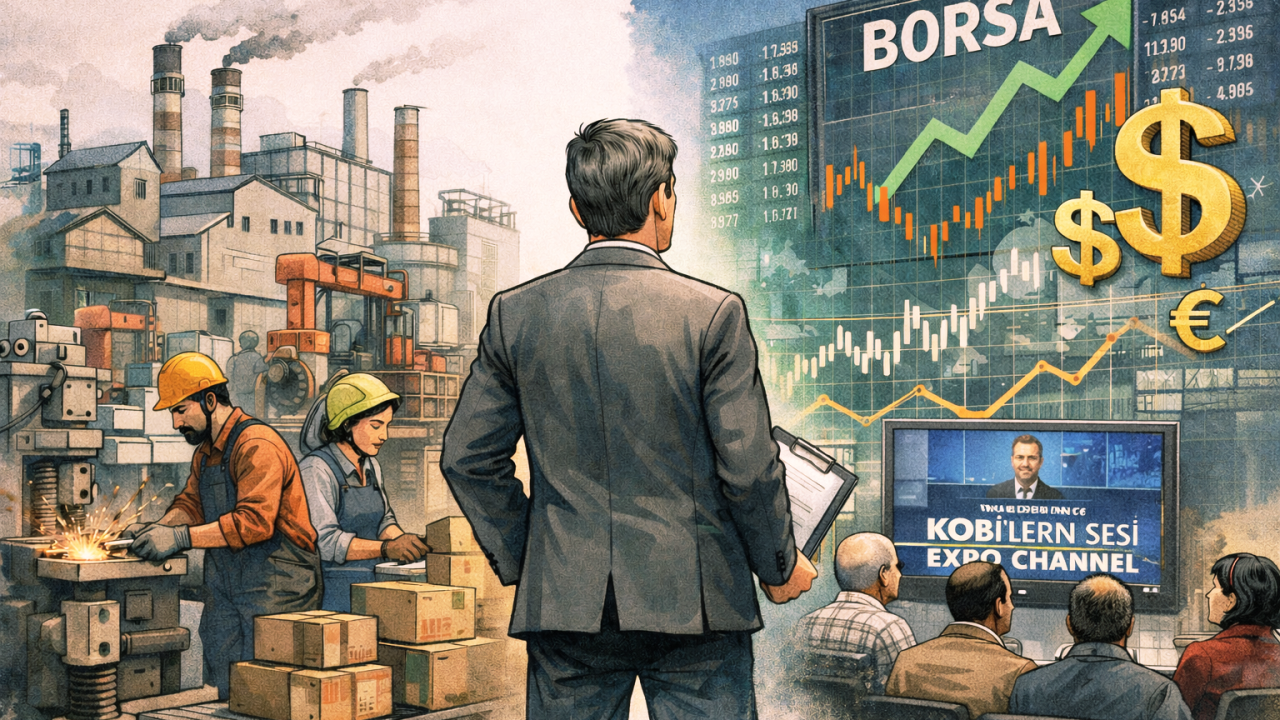
Whenever the voice of finance rises in Turkey’s economic history, the voice of production becomes a little quieter. The stock market, interest rates, foreign exchange… these are certainly the pulse of the economy, but they are not its soul. The soul still lives in organized industrial zones, in workshops, in the hands that start working with the first light of the morning. The story of the real sector is not a statistic; it is a way of life. This country learned its industrial culture not from large conglomerates, but from people who produce. Dreams that began in small workshops turned into medium-sized enterprises; from there, into brands. Many companies that have become the driving force of the economy today were born on those modest production benches. Behind those benches there was not only capital, but also character and patience.

A Turning Point in TV Broadcasting: Bringing the Real Sector to the Screen

The KOBITÜRK and Expo Channel era; in the early 2000s, economic broadcasts on television were almost identical: the stock market, interest rates, foreign exchange. But outside that triangle, a whole country was living, producing, exporting, and creating employment. Expo Channel was born to fill that gap, along with the KOBITÜRK project that grew within it.

This structure, which we called “the television of the real sector,” made Turkey’s production pulse visible in a regular way for the first time. Those who remember know well: the broadcasts that started on Digitürk channel 45 turned into a production showcase explaining hundreds of sectors in their own language. KOBITÜRK was not only a TV project; it was a field of solidarity. Nearly 1500 SMEs from all over Turkey had the opportunity for the first time to tell their own stories on a national screen. Those programs opened with factory sirens, images were taken from production lines, and not only company owners but also masters spoke. Every face that appeared on the screen represented a piece of Anatolia. Organized industrial zones, KOSGEB and provincial representatives watched these programs with interest. Because there were only real stories there: young entrepreneurs exporting products, women industrialists who expanded their workshops and established factories, family businesses that became brands with the second generation… This broadcasting approach produced not only information, but also confidence.

From Visibility to Growth: Brands Born from the Screen

Today, it makes me truly proud to see that many of the “big” brands advertising on mainstream TV channels once appeared on Expo Channel TV screens within the scope of the KOBITÜRK project — companies whose first television experience was filming advertisements, giving interviews, and speaking in the sector squares we built in the middle of trade fairs.

At that time, and even today, the conventional advertising pie in mainstream media remained limited to around 200–300 companies. Being able to expand this ecosystem to 1500 companies through the KOBITÜRK project became the greatest motivation for me and the Expo Channel team.

SMEs that grow as they gain visibility are the quietest yet most powerful headline of the national economy. Because that day we did not simply open a screen — we opened a stage. We did not grow advertising; we expanded the field of opportunity.

SME Power: Turkey’s Medium-Scale Intelligence Advantage

SMEs represent Turkey’s most unique advantage: medium-scale intelligence. They are neither a bureaucratic giant nor a fragile small business. SMEs are the unseen heroes of the economy with their agility, innovation power, courage to take risks, and flexible decision-making mechanisms.

This structure knows how to survive in crises and change direction quickly in times of transformation. Medium-scale intelligence is not only production capability; it is the combination of mind, intuition and conscience. What will make the difference in Turkey’s globalization journey is the systematic support of this intelligence.

Production Is Not Only an Economy, It Is a Value System

Producing is not only producing goods; it is producing responsibility. What adds value to a product is not only its price, but the intention behind it. In this sense, the real sector is a culture: the common ground of honesty, diligence and sustainability.

If the lights of factories are on, the source of that light is not electricity; it is belief. The master who works all night at the machine and the entrepreneur who turns that production into a brand are links in the same chain.

From Product to Brand, From Brand to System

Real export is not selling a product but selling a system. Branding is the transformation of production into a story and the story into value. Every store a brand opens abroad becomes an invisible ambassador of the economy.

The franchise model is at the center of this transformation. Franchising does not only mean building a chain of stores; it means sharing knowledge, trust and success. Every franchise agreement is the transfer of production intelligence to another country. For this reason, franchising is not a classical investment, but the export of intelligence.

Multi‑Brand Retailing: The New Generation Permanent Export Model

The multi‑brand retail model is a structure where multiple Turkish brands are present under the same roof, based on joint promotion, joint logistics, joint digital management and omni‑channel foundations.

This model does not grow individual competition, but collective gain. Opening stores together, being visible together and creating sustainability together… This is a new form of export: permanent export.

The goal is no longer a single shipment, but brand‑based structures that provide long‑term foreign currency inflow. Every multi‑brand store becomes a showcase through which the culture of production opens to the world.

A New Development Move: Growing an Ecosystem, Not Just Companies

The most realistic development scenario for Turkey ahead is not an industrial revolution, but a revolution of intelligence. SMEs must digitalize, become brands, be managed with data, and integrate into global markets.

The issue is no longer just producing; it is making production sustainable. Trade fairs, digital portals and investor–brand meetings are the practical tools of this transformation.

A fair is no longer only a promotion space; it is an interaction platform where the real sector socializes and builds its growth strategy.

The Franchise Economy: A Structure That Grows by Sharing

The franchise ecosystem is one of the strongest tools of Turkey’s modern development story. Buying a franchise is not only starting a business; it means becoming part of a brand system.

This structure is built on trust; it includes training, guidance and solidarity. The franchise model creates employment, strengthens women entrepreneurship and connects local producers with national brands.

Franchising is the modern manifesto of the real sector.

An Economy That Grows with Intelligence Wins

Medium-scale intelligence is Turkey’s quietest but most powerful resource. A country develops with the intelligence of production, the intelligence of sharing and the intelligence of systems.

The future will be determined by those who write it not at desks but on production lines. To those who ask “How do we become permanent?” our answer should now be:

“The one who uses intelligence wins; the one who shares grows.”

At this point, the role of public administration is not only to announce support mechanisms, but to pioneer simple, accessible and scalable systems that place production intelligence at the center and create opportunity spaces that open the path for the production ecosystem.

A correctly designed system produces more permanent results than a single incentive.


Read More
Özhan Erem

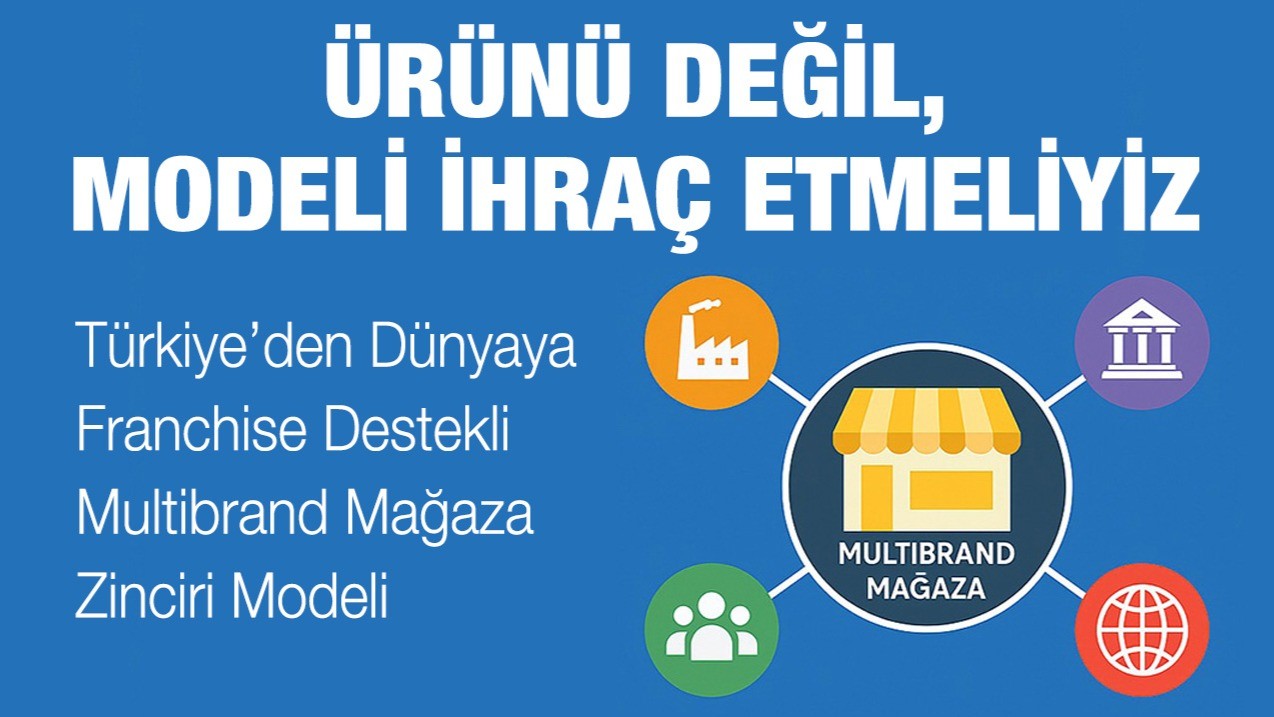
From Türkiye to the World: A Franchise-Supported Multibrand Store Chain Model


“We Should Export the Model, Not Just the Product!”
When it comes to exports, producing is no longer enough. Selling is no longer enough!

For years we have been repeating the same sentence: “We must make value‑added exports.”

So what happens next?
- The design is ours.
- The R&D is ours.
- The raw material, labor, molds and standards are ours.

But…
- The store belongs to someone else.
- The showcase belongs to someone else.
- The retail margin belongs to someone else.
It is time to ask this question:
“If we produce so much, why can’t we tell the story?”

The Name of the Model: Franchise‑Financed Multibrand Store Chains

This article does not describe an idea. This article describes a model. This model challenges the traditional understanding of exports.
It is not complex. It is realistic. It is applicable. It is sustainable.

In short:
- Many Turkish brands come together under a single roof abroad.
- A chain is formed through franchising with a “multibrand store” concept.
- A foreign investor who purchases the franchise receives financing from a Turkish state bank under suitable conditions.
- Supply, software, training, operations, CRM and digital infrastructure: all provided from Türkiye.
- And the most critical point: manufacturers, suppliers, architects and logistics partners become stakeholders in the system.

The result?
The product sold is ours, the store is ours, and the story is ours.

How Does This Model Work?

1. Who Is the Franchisee?
An investor from abroad. Someone who knows the target market, has a local network, an entrepreneurial spirit and capital.
Perhaps someone from our Turkish diaspora living in that country.
But not like a classic franchise: financial accessibility is provided to enter the system.

2. How Does the Bank Become Involved?
Through overseas branches of Ziraat Bank, Halkbank or Eximbank, credit can be provided to the foreign investor who will purchase the franchise.
This both supports exports and provides regular foreign currency income for the bank.

3. What Does the Partnership Structure Look Like?
A multi‑partner joint‑stock company (A.Ş.) is established to manage the model. This company can be supported by a Venture Capital Investment Fund (VCIF). The Capital Markets Board (SPK) legislation allows this.
Who becomes partners?
- Brands
- Contract manufacturers
- Logistics and architectural offices
- Software and CRM companies
- State banks and/or participating funds

4. Omni‑Channel Is Mandatory
Stores will not only be physical:
- Online shopping infrastructure
- Mobile application
- Loyalty and CRM systems
- Data analytics modules
All will be integrated. Every touchpoint will be fed by data.

Which Sectors Can It Be Applied To?
Ready‑to‑wear + Accessories + Shoes + Bags + Jewelry:
An “Urban Chic” store.
Furniture + Lighting + Decoration:
With concepts such as “Living Turkish” or “Modern Heritage”.
Home textiles + Furniture + Bathrobes + Towels + Beds + Decoration:
A “Home Lifestyle Store”.
DIY Market + Garden + Smart Home Technologies:
A “Practical Living Store”.
Ethnic Products + Gourmet + Cosmetics + Jewelry:
An “Anatolian Concept”.
Kitchenware + Plastic Household Items + Glass and Porcelain:
A “Smart Kitchen Store”.
Coffee + Turkish Delight + Books + Gifts:
A “Cafe Lounge + Culture Store”.
And many more. As long as the target market is matched with Türkiye’s production and branding capabilities.

Why Should Every Store Have Coffee?
Because coffee means experience. Because coffee means conversation.
Today we have local coffee brands that are more creative than global coffee chains. If every multibrand store includes a coffee lounge:
- Customers relax
- The purchasing process becomes longer
- Stories are sold together with coffee
Coffee becomes the insurance of this system.

Why Now?
- Exchange rate increases are putting pressure on export costs
- Global demand is slowing
- Türkiye’s production infrastructure is reaching its limits
A new model is now needed. We must create a difference not with traditional exports, but with system exports.
This is not just a chain store project. It is a new tool of economic diplomacy.

Final Word:
“We should now send systems to the world, not just products.”
“We should build structures that can be operated together, not just things to be sold.”
This model is an ecosystem that will go beyond both traditional trade fairs and traditional export approaches.
Let’s name it together. Let’s grow its vision together.

Read More