
Franchise investment offers significant advantages compared with starting a business from scratch. An established brand, a proven business model, and support from the franchisor provide investors with an important level of confidence. However, none of these factors guarantees that an investment will succeed. Particularly in restaurant and retail investments, location, sales potential, cost structure, profitability, and the investment payback period should be carefully analyzed before any agreement is signed.
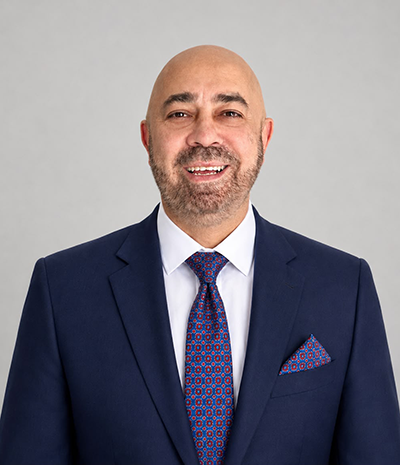
We spoke with Bora Tanrıkulu, Co-Founder and Senior Consultant at LexorPartners, about what prospective franchise investors should consider, how brands should prepare before launching a franchise system, and why the right location decision must be supported by a detailed feasibility analysis.
Bora Tanrıkulu graduated with honors from Boğaziçi University and began his career as a Product Manager at Colgate-Palmolive. He later held director-level and senior positions in sales and marketing at companies including Tansaş, Migros, Carrefour, and McDonald’s. During the pandemic, he served as Assistant General Manager responsible for Sales and Marketing at Avansas.
Today, as Co-Founder and Senior Consultant at LexorPartners, he provides consultancy in franchising, sales, marketing, CRM, brand management, and growth strategies.
“The first question should not be: Which brand should I choose?”
One of the most common mistakes I see is investors immediately trying to choose a brand. Especially at franchise exhibitions, you encounter many brands, successful stores, and appealing products, so naturally you can be influenced by what you see. But I believe investors should first define their own investment framework. How much capital can they allocate? Will they personally manage the business? How much risk are they willing to take? How many years do they expect the investment to take to pay back? And is the chosen industry actually suitable for them? Making a decision based solely on the brand before answering these questions is not the right approach.
Of course it does, but a strong brand alone is not enough. Liking a brand as a consumer is one thing; being able to make money from that brand as an investor is another. I believe three elements must come together in a franchise investment: the brand, the location, and the financial model. You can open a strong brand in the wrong location, or operate in an excellent location with the wrong cost structure. In either case, the investment may fail to deliver the expected results.
“Even a strong brand cannot always compensate for a poor location”
It is extremely important. However, location decisions are still too often based on intuition. Comments such as “this street is very busy,” “a lot of cars pass through here,” or “there is a large residential development across the street” may be relevant, but they are not enough. Vehicle traffic may be high, but stopping may be difficult. There may be heavy pedestrian traffic, but those pedestrians may not be your target customers. The surrounding population may be strong, but the rent may be too high relative to the location’s sales potential.
“For us, there is no such thing as a universally good location. There is only the right location for a particular brand and business model.”
We work from the macro level down to the micro level. We analyze the district, neighborhood, street, and, where necessary, the individual building. After reviewing factors such as population, income profile, working population, residential development, commercial activity, and the direction in which the area is growing, we examine the specific site itself. We assess visibility, frontage, parking, vehicle and pedestrian traffic, ease of access and exit, public transportation, competitors, and delivery potential.
The question we ask is not simply, “Can a restaurant be opened here?” The real question is, “Can this brand attract enough customers at this location and generate sustainable profits?”
“You cannot conduct a restaurant feasibility analysis based solely on neighborhood population”
The resident population is important, but a restaurant’s customers are not limited to people who live nearby. If there is an organized industrial zone nearby, the working population becomes relevant. If there are offices, lunchtime demand comes into play. Hotels create demand from guests, while residential density contributes to evening and weekend traffic. Transit traffic, commercial activity, and the delivery catchment area must also be included in the analysis.
We take a similar approach to competition. A high number of restaurants is not necessarily a negative sign; sometimes it indicates strong demand for food and beverage in the area. The important question is whether the new brand can capture enough customers within that existing demand.
We combine the performance of the brand’s existing restaurants with the area’s customer potential, competitive landscape, and specific location characteristics to model the expected number of daily customers. Using the average transaction value, we then develop daily, monthly, and annual sales forecasts.
However, we do not provide just one revenue figure. We generally prepare three scenarios: conservative, base, and upside. This allows us to see what happens if sales fall below expectations. I believe this is one of the most important issues for investors. They should not only ask, “How much can I earn?” They also need to know the answer to “What happens if things do not go as expected?”
“High revenue does not always mean a good investment”
Not always. A restaurant generating very high revenue may also have extremely high rent or labor costs. That is why, after estimating revenue, we calculate gross profit, labor costs, rent, franchise-related costs, and other operating expenses, and then assess EBITDA.
Sometimes a location with lower sales potential can leave more money for the investor because of lower rent and a more efficient operation. Therefore, the key question should not be “How much revenue will this store generate?” but rather, “How much money will actually remain for the investor after generating that revenue?”
Workforce planning is also part of this equation. If you forecast 400 customers per day, you need to know how many kitchen and service employees will be required to serve them. When calculating the total investment, investors should consider not only the franchise fee, fit-out, and equipment costs, but also working capital. The resources required to finance rent, salaries, and other expenses until the restaurant reaches its target sales level must be included from the outset.
“A company must prepare itself before it starts franchising”
I believe this side of the equation is at least as important as the investor side. Franchising is not simply about setting a franchise fee and then starting to look for investors. First, company management must genuinely decide to grow through franchising and develop a clear strategy for doing so.
Özcanlar Köfte is a brand that entered the franchise system this year and has been building its franchise infrastructure. At LexorPartners, we work very closely with Özcanlar’s management on this process. Together, we address the fundamental framework of the system, from the regions targeted for growth and the ideal franchisee profile to the investment model and location criteria.
However, strategy alone is not enough. The organization, production facilities, logistics, supply chain, marketing, restaurant operations, construction, architectural concept, human resources, and financial monitoring systems must all be capable of supporting franchise growth. Business processes also need to be redesigned with this perspective in mind.
When you operate only a few restaurants yourself, certain problems can be resolved through the experience of your managers. But once you have a large number of franchised restaurants in different cities, that approach no longer works. The product, service, and customer experience must maintain the same standard in every restaurant. To achieve this, all processes, from production to training, must be clearly defined and measurable.
Özcanlar Köfte has a very clear strategy and implementation plan in this regard. We do not view the process merely as selling franchises; we consider investor selection, location, feasibility, operations, and financial performance as interconnected components of the same business model.
“The goal is not to sell franchises, but to create successful franchisees”
Sometimes it can, but I believe that is exactly how the process should work. Franchise candidates sometimes come to us with locations they have already identified, and even with the teams they are planning to establish. They may own the property themselves or may have found a location they particularly like. Even in those cases, we evaluate that location using exactly the same criteria we apply to every other candidate site.
For every candidate location we evaluate for Özcanlar Köfte, we analyze a wide range of variables, from the area’s population and working population profile to competition, vehicle and pedestrian traffic, parking, and delivery potential. We then develop daily customer and sales forecasts, calculate staffing requirements and operating expenses, and assess EBITDA and the investment payback period. If alternative locations are available, we compare them using the same model.
Sometimes the results for a location that a candidate strongly prefers can be negative. If our feasibility analysis shows that the restaurant is unlikely to generate sufficient sales and profitability, we say so clearly and recommend looking for another location.
In the short term, you may have succeeded in selling a franchise. But if the investor cannot make money, both the investor and the brand lose in the long run. The franchisee may begin cutting costs, service quality may decline, relations with the franchisor may deteriorate, and eventually the location may close.
That is why our approach with Özcanlar is very clear: the objective is not to sell franchises as quickly as possible, but to create profitable franchisees who will remain in the system for many years.
“Selling a franchise may represent a success for the franchisor; the franchisee making money is what represents the success of the franchise system.
“Our job is not simply to approve the location presented to us”
We do not simply say, “This location is not suitable.” If the candidate is the right investor, we then ask, “So where should this investment be made?”
We compare alternative commercial locations within the same district or area. One location may have stronger vehicle traffic, while another may have heavier pedestrian traffic. One site may offer excellent visibility but come with high rent; another may have slightly lower sales potential but deliver a much faster investment payback because of its more favorable cost structure.
That is why we are not necessarily looking for the location that can generate the highest revenue. Instead, we aim to identify the location that can provide the investor with the most sustainable outcome in terms of the risk-return balance.
I believe this is the real purpose of a feasibility analysis. It should not be used simply to validate a decision that the investor or company management has already made. Its purpose is to determine whether that decision is actually the right one.
“A good feasibility analysis should show not only how much you can earn, but also under what conditions you could lose money”
Of course, it is important to know how many years it will take for an investment to pay back. However, calculating this based on a single sales forecast is not the right approach. An investment that looks very attractive under the base-case scenario may become loss-making if the number of customers comes in 10–15 percent below expectations.
That is why we look at the break-even point and evaluate different scenarios. What happens to the investment if sales decline, rent increases, or labor costs rise? Investors need to know the answers to these questions.
“I do not believe a feasibility report should be prepared simply to support an investment decision. When necessary, it should be able to say, ‘This investment should not be made.’”
What would be your final advice to someone considering a franchise investment?
First, get to know the brand, try its products, visit its locations, and, if possible, speak with existing franchisees. But after that, you absolutely need to sit down and look at the numbers. What is the total investment? Is the working capital sufficient? What data supports the expected customer numbers and sales forecasts? How many employees will be required? How much profit will remain after all expenses? How long will it take for the investment to pay back? And what happens if the business performs below expectations?
You should also evaluate the franchisor itself. Can its production and supply infrastructure support further growth? Is its logistics system sufficient? Does it provide operational and training support? Can it effectively monitor financial performance? In a franchise relationship, it is not only the investor who needs to be ready; the brand must also be prepared for growth.
Ultimately, franchise investment is not simply about finding the right brand or opening a store. The objective is to build a sustainable business in which both the brand and the investor can succeed over the long term.