
Fatih Kuralkan
“18+ years in location analytics”
Because, however simple this question may sound, it effectively determines a brand’s fate. Not just turnover, but investor confidence, the health of the franchise network, and the brand’s long-term reputation. A wrong decision on location can render even the best product, the strongest team and the most extensive marketing budget ineffective. In the past, these decisions were made based on experience and intuition. “This area is busy”, “Purchasing power is high in this region”, “There’s no competition here” — these were reasonable arguments, and they were the only tools at your disposal. But today, the situation has changed completely. Growth is no longer felt — it is calculated. Statistical models have replaced intuition. And this transition represents a point of no return. Because the competitive landscape has changed fundamentally. Fifteen years ago, there might have been two or three competitors on a given street. Today, there are five, six or seven brands on the same street. They are all strong. They are all experienced. They have all made significant investments. In this environment, a ‘good location’ is no longer enough—you need the absolute best location. And the only thing that makes the difference is data. Furthermore, consumer behaviour has become far more complex. Pedestrian traffic varies by the hour, the demographic makeup differs from street to street, and competitor density has become dynamic. Assessing all these variables simultaneously is now beyond the capacity of the human brain. This is where data comes into play. "There are now five strong brands on the same street. Which one is winning? The one with the most accurate location — and the only thing that makes the difference is data."
You say that for the past 18 years you have focused on a single question: "Where should a brand grow?" Why is this question so crucial?
So how did this transition come about? At one point, intuition was enough; why isn’t it enough now?
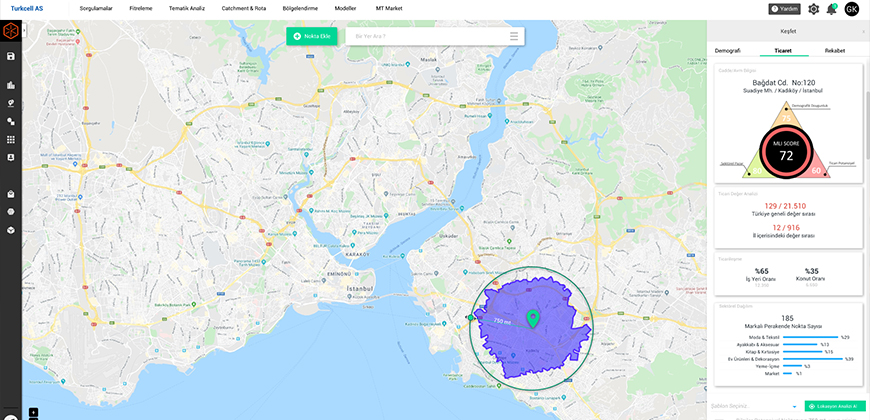
From Software to a Growth Engine
Because a traditional technology company sells software, and that’s where its role ends. The customer is left to figure out for themselves what to do with that software, what questions to ask, and how to interpret the data. This approach is like giving a brand a map—you still have to work out for yourself where you’re going. At Maptriks, we do things differently. We don’t just provide data; we determine where, how fast and how a brand should grow. We do this by combining data, analysis and on-the-ground reality. We optimise location selection, minimise investment risk and embed growth within a repeatable system. In essence, we establish the mathematics of growth — and integrate that mathematics into the brand’s strategy. The difference is this: a technology company provides tools. We deliver results. Whatever the sector, we have seen that every company eventually discovers the same truth: the wrong location can drag even the best brand down. This is not just a generalisation. We have seen first-hand how a branch opened by a strong national chain in the wrong location closed within two years, and how a franchise that had been profitable for years went into decline after moving to the wrong location. Another common pattern is this: even experienced managers fall prey to systematic biases when making location decisions. This is because the human brain remembers success stories and forgets the failures. Data, on the other hand, evaluates both successes and failures with equal weight. This difference creates a significant chasm in the quality of decision-making. To be honest, both scenarios exist. Large corporate firms have long since completed this transition. For them, data-driven location decisions are no longer even up for debate—they’re standard procedure. The real tension lies with medium-sized brands and those striving to grow. Here we see a paradox: even managers who have suffered losses due to poor location choices still make their next decision based on gut instinct. Because ‘data’ feels abstract; its costs are unclear, and how it works is hard to grasp. We’ve been trying to break this perception for years. And it’s finally starting to crack. Because failed examples have piled up, and the bill has become too heavy to bear. ‘Even experienced managers get it wrong — because the human brain remembers successes and forgets failures. Data treats both with equal weight.’
You describe Maptriks as a "growth engine" rather than a traditional technology company. Why is this distinction so important?
You have worked with over 500 corporate firms across 16 different sectors. What common patterns did you observe across such a broad spectrum?
You talk about a shift in mindset — but has this shift actually taken place? Or is there still resistance?
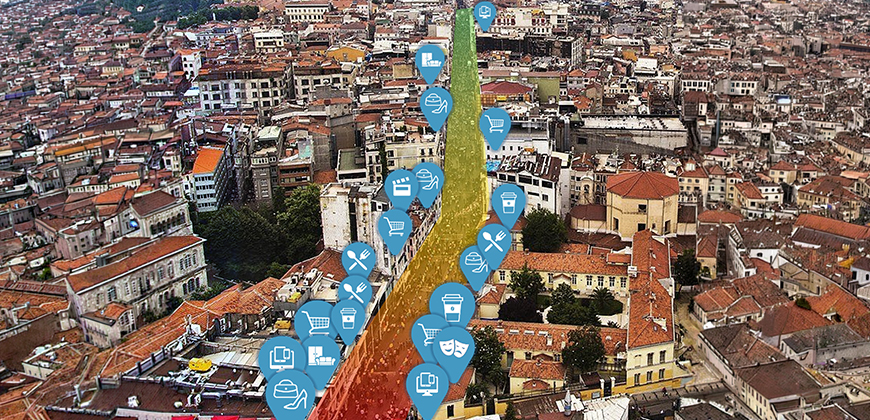
The Weight of a Single Decision
In the franchise model, everything hinges on a single question: Are you in the right location? This question affects the entire operational model. Even an average operation in the right location will generate a profit. In the wrong location, even a perfect operation will incur a loss. And when this balance is disrupted, a domino effect sets in: high rent eats into revenue, low turnover disappoints the investor, and a dissatisfied investor becomes a burden that weakens the brand. Large chains do have the capacity to make up for this mistake, true. But every failed branch drags down the network’s overall profitability. And more importantly: the reputational impact of a poor location decision on the brand lingers for a long time. The closed branch is forgotten, but the investor who suffered a loss does not forget. An operational decision means: it affects day-to-day operations, can be reversed, and can be corrected. A flawed pricing strategy, a poorly designed campaign—these are operational mistakes. They can be rectified. A location decision, however, is irreversible. When you commit to a location, you are entering into a commitment of at least three to five years. Rent, fit-out, staff investment — all of these are tied to that location. By the time a mistake is realised, it is often too late. That is why location must be addressed at a strategic level from the very outset. It must be on the senior management’s agenda and not simply left to the operational team.
Why is the choice of location so critical in the franchise model? Can’t large chains make up for mistakes?
You describe the decision on location as a strategic rather than an operational one. Could you elaborate on this distinction?
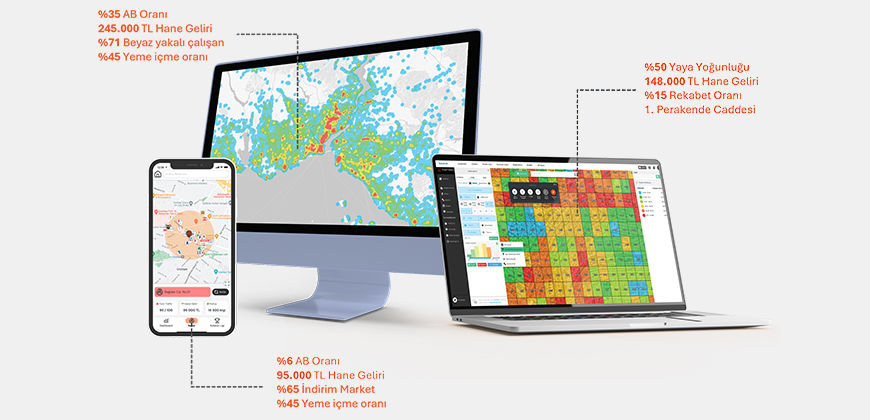
The Data, Speed and Trust Triangle
Better decisions, lower risk, faster returns and systematic growth. All of these are measurable. Avoiding the wrong location significantly shortens the payback period. Faster ROI directly impacts the franchise network’s capacity for expansion. But I must add this: the greatest value is not numerical. Being certain when making decisions. The cost of uncertainty is not merely financial — it is also extremely significant in operational, psychological and brand value terms. A manager constantly asking themselves, “Did I make the right decision?”, drains their focus and energy. Data eliminates this uncertainty. And this represents true freedom, beyond mere tangible gains. Let me give you a very simple example. There are five brands on the same high street. They are all strong, they are all well-known, and they all run efficient operations. What determines which one attracts more customers? It is no longer just product quality or price. Who has a better understanding of which demographic passes by at what time of day, and with what needs? If you can analyse your competitor’s customer profile, footfall patterns and shopping timings from the data, you’re one step ahead. If you don’t know this, assume your competitor does. Competition no longer begins on the shop shelves, but in the data infrastructure. And this difference emerges in the analytics tables long before it’s reflected in the physical shop. "The cost of uncertainty isn’t just financial. A manager constantly wondering, ‘Did I make the right decision?’ drains their focus. Data lifts that burden."
What concrete benefits do brands working with Maptriks gain? Can you put this into figures?
You say that competition is no longer won on the high street but in the data. Could you elaborate on that a little?
The Rules of the New Era
Consolidation. Brands that invest in data infrastructure will grow; those that don’t will shrink or withdraw from the market entirely. It’s that simple. In ten years’ time, we’ll look back and see that what seems like a small difference today has, over time, turned into an insurmountable gap. Let me also add this: the integration of artificial intelligence and machine learning into location analytics is accelerating. Today we speak of an ‘87 per cent probability of success’. In five years’ time, these predictions will be far more granular and far more immediate. Real-time location-based decisions will become a reality. Brands preparing for this transformation will be years ahead of their competitors. I would say this: It is essential to have a strong brand, but that is no longer enough. A good product is essential, but that is no longer enough. Being in the right location is a must, but a systematic approach is now essential to finding the very best location. I’m not saying don’t trust your intuition. I’m saying build your intuition on top of data. The two aren’t at odds — intuition, when fuelled by data, produces far stronger decisions. But intuition without data is playing with a huge risk. And there’s no reason to take that risk. A new era has begun in the franchise world. Those who make decisions based on data will succeed. Brands growing with Maptriks aren’t just growing — they’re growing in the right, profitable and sustainable way. The future is clear.
How do you foresee the next five to ten years in the franchise industry? Where is this transformation heading?
Finally: What would you say to a franchise investor or brand manager reading this interview?